POWER ON: The future of electricity generation
Innovation Corner presents pioneering energy supply technologies
With its new collaboration partner VERBUND, the Vienna Museum of Science & Technology (TMW) is presenting trailblazing innovations from the field of sustainable energy supply: because the transition to clean energy does not just need good ideas, but applicable products to ensure sustainable electricity supply in Austria.
In 2026, visitors to the TMW will be presented with eight cutting-edge technologies that VERBUND has developed itself or funded through partnerships with start-ups. The range of innovations presented here includes a nervous system for wind power plants, diving robots for easier servicing of hydropower plants as well as autonomous drones for monitoring critical infrastructure. Visitors learn what organic photovoltaics are, what digital twins of hydropower plants can be used for, and what 3D printers have to do with ensuring our energy supply.
With the presented projects, the Innovation Corner focuses on the ingenuity of Austrian innovators and offers insights into the applications of their pioneering research. The first example, "POWER ON: The future of electricity generation", will be on display at the TMW until 31st August 2026.
The projects:
Sensor system for wind power plants (EOLOGIX-PING)
Inspections of wind power plants are often difficult and risky at high altitudes - but must be carried out on a regular basis to provide clean electricity. EOLOGIX-PING, a start-up from Graz, has developed sensor technology that is installed directly on the rotor blade for early detection of ice formation or damage - for example, as a result of lightning strikes. The system reduces risky climbing trips, increases safety, and minimises downtimes of wind power plants.
Organic photovoltaics (Heliatek)
Conventional solar modules are too heavy for many spaces, leaving billions of square metres on roofs and facades unused in the transition to clean energy. Organic photovoltaics, or OPV for short, use wafer-thin and flexible solar films to unlock this potential and also enable a variety of new applications, for example as hybrid modules on wind power plants, facades or roofs. The solar films from the start-up Heliatek show that in the future, electricity generation need not be limited to individual power plants, but can happen all around us.
PV carport system (MEISER Solar Solutions)
By developing modular PV carports, Meiser Solar Solutions is turning already sealed areas into electricity generators: the flexibility of the system allows a wide variety of surfaces to be used. This involves combining energy generation with a canopy that protects vehicles from environmental influences while creating space for charging stations. The product was developed by an Austrian startup.
Metal 3D printing at the digital hydropower plant (VERBUND Hydro Power GmbH)
At its "Digital Hydropower Plant", VERBUND Hydro Power relies on state-of-the-art additive manufacturing methods to ensure the availability of spare parts. Many older components are no longer available as standard models, but can be quickly and cost-effectively reproduced using 3D printing, ensuring the reliability of the hydropower plant and reducing downtime.
Hydropower innovations (VERBUND Hydro Power GmbH)
How do you inspect facilities under water without divers? How do you monitor miles of dams? Diving robots that perform underwater inspections, as well as autonomous boats and drones, can extract data from the air and water and detect anomalies without putting human lives at risk. Projects such as "Chip the Fish" monitor migrating fish, while digital 3D twins create new opportunities for employee training.
On a dive at the power plant (VERBUND Hydro Power GmbH)
300-metre deep dives to access and monitor plant components such as bottom outlets, sealing films, inlet rakes and weir fields are key to the safety and efficiency of hydropower plants. Robots equipped with cameras or imaging sonars can be used to reach sites that are difficult to access to detect wear earlier and perform preparatory maintenance work.
Robot dog Zerberus and "drone-in-a-box" system (Globe Flight)
Critical energy infrastructure does not just need to be monitored in areas that are sometimes inaccessible, but also around the clock. Autonomous drones equipped with thermal imaging cameras detect minute irregularities from the air, while robot dogs on the ground collect important data. Combined by artificial intelligence, irregularities are identified early on, thus ensuring the energy supply.
About Innovation Corner: Austrian start-ups excel in a wide variety of areas. Innovation Corner is a presentation format designed to introduce these pioneering technologies and innovations to museum visitors. Exceptional ideas and innovative solutions are presented and changed regularly. The TMW becomes a platform for researchers and founders to present their inventions to the public.
Innovation Corner: POWER ON: The future of electricity generation
- until 31st August 2026
- Press material: tmw.at/presse/innovation_corner/power_on
- Exhibition website for "POWER ON" in the "Innovation Corner": tmw.at/ausstellung/innovation_corner
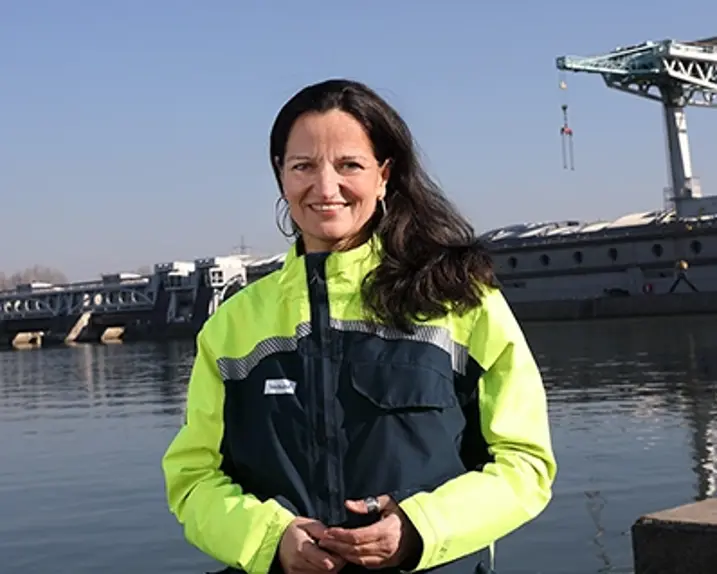
Ingun Metelko
Company Spokesperson