5.8 kilometres of new, near-natural habitat at the Egglfing-Obernberg power plant in Austria
Less than two years after the Braunau-Simbach power plant’s fish pass project started, VERBUND is launching the next major nature conservation project on the Lower Inn River. Within the framework of the EU-LIFE "Riverscape Lower Inn River" project, the largest near-natural bypass channel on the Inn River is being built at the Egglfing-Obernberg power plant over a length of 5.8 kilometres—a new structure-rich aquatic habitat for animals and floodplain plants.
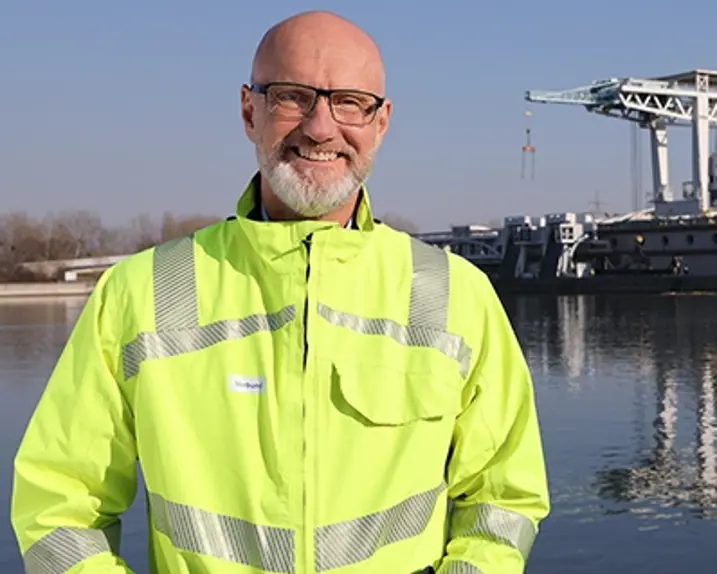
The official groundbreaking ceremony on 8 May 2026 kicked off construction of the longest fish pass in the Inn River. Local political representatives, project partners and employees were present to pay honor to the start of construction work at the Egglfing-Obernberg power plant. Over the next year and a half, VERBUND will build a near-natural bypass channel there. Thanks to its ecological design, this will not only allow fish to migrate, but also create new spawning grounds and refuges for the diverse range of fish and aquatic creatures in the Inn River.
More than just a passageway
The fish pass planned by aquatic ecologists and hydraulic engineers is much more than a mere passageway: with fords, flow-exposeed gravel bars, shallow water zones, deadwood and bays, a structurally rich waterbody with a natural discharge dynamic is being created at the environment of the Egglfing-Obernberg power plant. In the future, flat gravel bars will be used as spawning grounds and habitats for juvenile fish, while deep water zones will provide room for large fish that live in the Inn River, such as the huchen.
Depending on the season, between 4 and 10 cubic metres of water will flow through the new fish pass per second. During the spawning season from spring to summer, a controlled supplementary feeding structure makes it possible to increase the flow seasonally. The Malchinger Bach also flows into the new waterbody, and the Inn River bank is being restored below the estuary along a 1.7-kilometre stretch.
"This project incorporates the experience of all the fish passes we have built over the past two decades. New habitats for gravel-breeding bird species, amphibians, reptiles, insects and typical vegetation are emerging around the bypass channels. Construction work is being carried out in a climate-friendly manner: the excavated material is being reused for new gravel habitats directly on site," explains Michael Amerer, managing director of the VERBUND border power plants.