Fish Migration Day 2026: Ten years of fish research in the Inn River
The benefits of near-natural fish passes and restoration can be proven
A long-term joint project between VERBUND and the Technical University of Munich (TUM) shows that near-natural fish passes in the Inn River are much more than just migration corridors. They are rich in biodiversity, offer valuable habitats for different stages of development of aquatic organisms and demonstrably contribute to the natural reproduction of protected fish species. The results of the research show the effectiveness of the restoration measures, in which VERBUND is investing around 100 million euros in Bavaria and on the border with Austria.
As part of the 10-year research project on fish habitats carried out by VERBUND and TUM’s Chair of Aquatic Systems Biology Unit, a total of 2,163 fish samples were taken between 2015 and 2025 over a total length of 64,890 metres along the Inn River between the Nussdorf and Ering-Frauenstein power plants. A total of 150,565 fish from 45 species were recorded. These studies were supplemented by 1,600 drift net samples for analysing fish larvae and fish eggs. The scientific review of the project resulted in 14 publications and around 50 student dissertations.
The results clearly show that near-natural fish passes in the Inn River are far more than mere migration corridors: they perform important habitat functions and are used as a habitat by a diverse variety of fish species. Almost 38,000 individuals from 36 species of fish were identified in the 12 near-natural fish passes examined. It is also noteworthy that the species composition here is very similar to that in the tributaries of the Inn River. This confirms the concept’s success in creating near-natural bypass channels that emulate the Inn River’s highly structured lateral branches and tributary waters in an ecologically effective way.
Of particular note are the regular reports of strictly protected species such as the European bullhead and huchen, as well as individual reports of particularly rare and, in some cases, almost extinct species such as the souffia, Danube gudgeon and misgurnus. In particular, the discovery of the Danube gudgeon in the Ering-Frauenstein fish pass underscores the potential of near-natural facilities in the Inn River as refuges and resettlement spaces for rare and endangered fish species. The frequent presence of the grayling was also striking, with several studies showing that these structures can represent key habitats important for the species throughout its life cycle. The documented fish sizes in the overall project ranged from just one-centimetre-long fish larvae to a 163-centimetre-long catfish, illustrating the wide ecological range of habitats created through renaturalisation.
15 huchen spawning pits mapped at Töging power plant
The research provides important insights into natural reproduction: egg and larval drift studies, supplemented by genetic methods for species verification, show successful reproduction of protected species such as the nase, grayling, huchen and European bullhead, both on restored spawning grounds in the Inn River and in near-natural fish passes. The spawning ground areas were preferentially used for egg laying and offered favourable conditions for developing eggs and larvae. Current evidence of the effectiveness of the measures is the detection of 15 huchen spawning pits, which were mapped in 2026 in the diversion channel of Töging power plant.
Ecology programme and monitoring to be continued
For years, VERBUND has supported comprehensive restoration projects on the Danube, Inn, Drau, Enns, Mur and other rivers. The goal is to improve environmental continuity while at the same time developing structural habitats for fish and other water-bound organisms. Today, 75 per cent of all VERBUND power plants are passable.
The 10-year research project on fish habitats in the Inn River impressively shows that near-natural fish passes and renaturation not only improve passability but also create high-quality habitats that are used by a diverse variety of species, enable natural reproduction and help stabilise fish populations over the long term.
A significant result of the project is also that renaturation does not stop at construction. Since natural fluvial dynamics are limited in regulated systems such as the Inn River and the fish passes that have been built, the measures implemented need to be regularly managed. Therefore, management guidelines containing specific recommended measures and schedules were developed based on the research findings. These help to put scientific knowledge into practice and to ensure the environmental effectiveness of the measures over the long term.
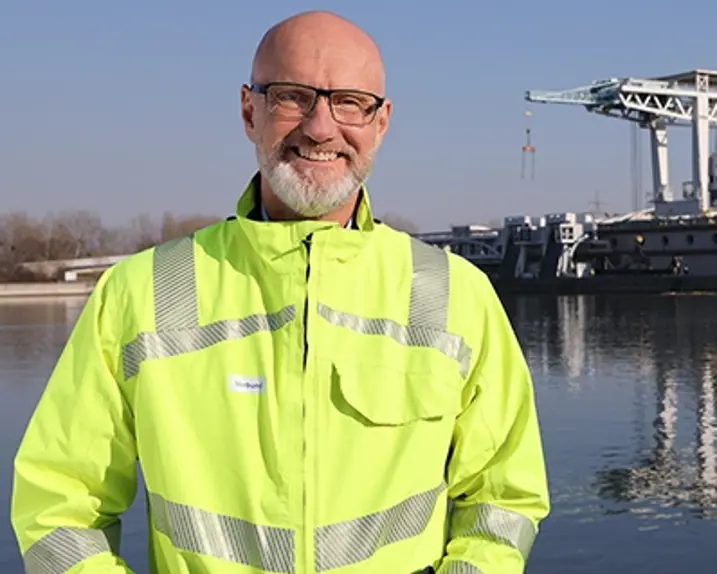
Johannes Wesemann, VERBUND project manager, said: “For VERBUND, restoration is a major component of sustainable hydropower. The results of the long-term Inn River project show that near-natural bypass channels are much more than technical structures: they link habitats, promote protected species and create ecological quality throughout the river system. It’s not just the implementation of measures that matters to us but also their long-term success. That’s why VERBUND will continue the scientific monitoring to make fish passes and enriched habitats work in the long term.”
Christoffer Nagel, Technical University of Munich, said: “The data from 10 years of research clearly show that near-natural fish passes in the Inn River not only serve as migration corridors but also as habitats, reproduction grounds and refuges for a remarkable diversity of species. This is precisely where its great ecological value lies.”
Bernhard Gum from the Fisheries Advisory Service in the Upper Bavaria District said: “The 10-year fish and habitat research conducted by the Technical University of Munich on the Inn River impressively shows that the measures implemented by VERBUND for continuity and restoration make an important and effective contribution to the protection of endangered river fish species and aquatic habitats. As a fisheries advisory service, we are already benefiting from the insights gained. We will systematically incorporate these into our advisory, planning and implementation work in the Upper Bavaria district. We would like to express our sincere thanks to all the partners involved along the Inn River – from the research community and the Technical University of Munich to the fishing associations, the local authorities and the energy sector (VERBUND) – for their long-standing commitment, and we look forward to continuing our collaboration.” Photo
credits.
Rainer Tschopp
Spokesperson VERBUND